The von Hippel-Lindau (VHL) disease is a rare inherited disorder manifested by visceral cysts, benign masses, and the potential for malignant transformation in multiple organ systems. Clinical hallmarks of VHL disease are development of retinal and central nervous system (CNS) hemangioblastomas, pheochromocytomas, multiple cysts of the pancreas and kidneys, and a high potential for malignant transformation of renal cysts into carcinoma. Given the wide age range and pleiotropic manner in which VHL disease can be manifested, diagnosis of VHL disease and treatment of patients and their at-risk relatives are challenging.
VHL disease is transmitted in an autosomal dominant fashion with an incidence of approximately 1 case per 36,000 population that affects all races.
Mortality/Morbidity: Due largely to the high incidence of renal carcinoma, the average life expectancy of individuals with VHL disease is 49 years, although diligent surveillance may increase life expectancy. The mortality rate in carriers of VHL disease is high, with death occurring at a mean age of 41 years. Hopefully, the surveillance strategies will favorably impact this statistic.
The morbidity of VHL varies, depending on the particular organ system involved.
* The most serious sequelae of VHL disease involve malignant degeneration of renal cysts. Renal cysts are seldom clinically significant; however, they have an appreciable rate of malignant transformation, and renal cell carcinoma (RCC) is the leading cause of death in patients with VHL disease (35-75% prevalence in one autopsy series). Average age at which patients with VHL disease develop RCC is 44 years. These facts encourage the use of renal imaging on a regular basis.
* The second most common cause of morbidity and mortality in patients with VHL disease is CNS hemangioblastomas. The mean age at diagnosis is 29 years, and CNS hemangioblastomas typically are located in the cerebellum. While the lesions are rarely malignant, enlargement of the tumors within the confines of the CNS can result in neurologic compromise and death, if they are unresectable. Retinal hemangioblastomas, while not malignant, can result in considerable morbidity through retinal detachment or visual loss, which results directly from an enlarging lesion.
* Via secreted catecholamines, development of pheochromocytomas can result in hypertension and its deleterious sequelae.
For additional information:
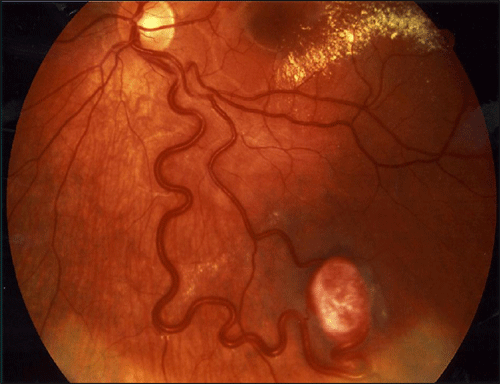 |
Retinal hemangioblastoma.
|
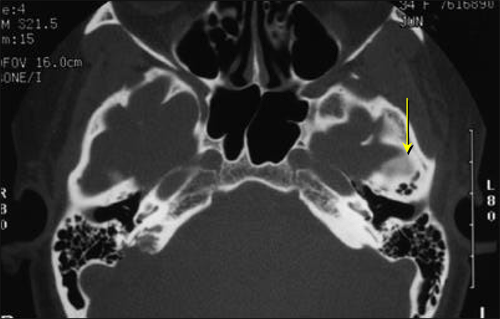 |
Endolymphatic sac tumor. | |
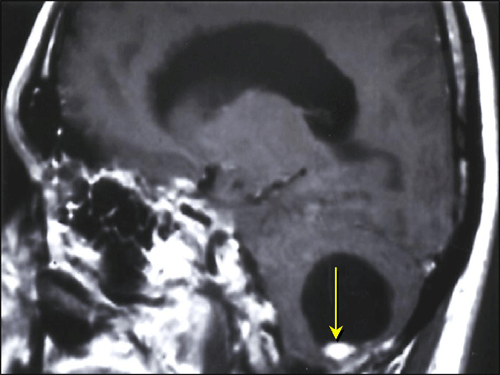 |
Central nervous system hemangioblastoma.
|
 |
Spinal cord hemangioblastoma. | |
 |
Normal adrenal gland.
|
 |
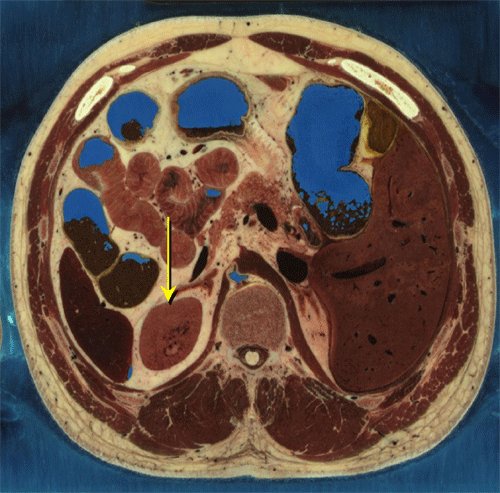
Pheochromocytoma (P). | |
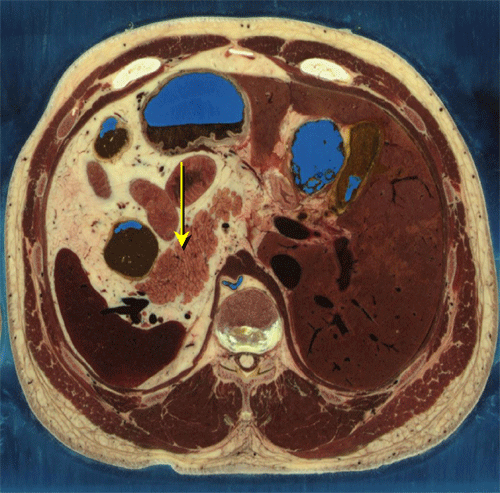 |
Normal pancreas.
|
|
Pancreatic tumor (I). | |
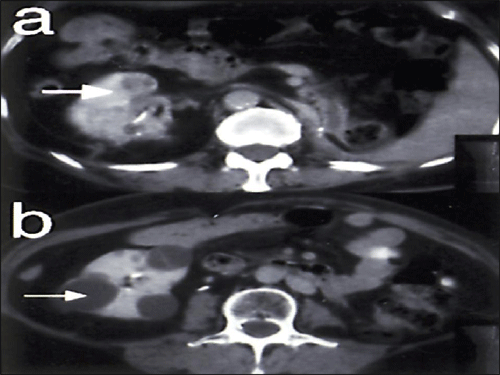 |
Kidney cysts and tumors. |
VHL disease is transmitted in an autosomal dominant fashion with an incidence of approximately 1 case per 36,000 population that affects all races.
Mortality/Morbidity: Due largely to the high incidence of renal carcinoma, the average life expectancy of individuals with VHL disease is 49 years, although diligent surveillance may increase life expectancy. The mortality rate in carriers of VHL disease is high, with death occurring at a mean age of 41 years. Hopefully, the surveillance strategies will favorably impact this statistic.
The morbidity of VHL varies, depending on the particular organ system involved.
* The most serious sequelae of VHL disease involve malignant degeneration of renal cysts. Renal cysts are seldom clinically significant; however, they have an appreciable rate of malignant transformation, and renal cell carcinoma (RCC) is the leading cause of death in patients with VHL disease (35-75% prevalence in one autopsy series). Average age at which patients with VHL disease develop RCC is 44 years. These facts encourage the use of renal imaging on a regular basis.
* The second most common cause of morbidity and mortality in patients with VHL disease is CNS hemangioblastomas. The mean age at diagnosis is 29 years, and CNS hemangioblastomas typically are located in the cerebellum. While the lesions are rarely malignant, enlargement of the tumors within the confines of the CNS can result in neurologic compromise and death, if they are unresectable. Retinal hemangioblastomas, while not malignant, can result in considerable morbidity through retinal detachment or visual loss, which results directly from an enlarging lesion.
* Via secreted catecholamines, development of pheochromocytomas can result in hypertension and its deleterious sequelae.
For additional information:
 |
 |